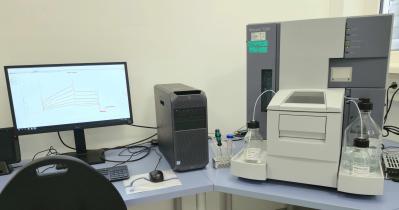
Method overview - SPR (Biacore)
Surface Plasmon Resonance (SPR) Capabilities at VelaLabs
At VelaLabs, we use advanced Surface Plasmon Resonance (SPR) technology, specifically Biacore T200 systems, to deliver precise and reliable biomolecular interaction results. SPR is a powerful, label-free technique that measures changes in the refractive index near a sensor surface, allowing real-time monitoring of binding events between molecules.
Our SPR services cover a wide range of applications, including:
- Kinetics and Affinity: Determining the rate constants for association (ka) and dissociation (kd) between molecules, providing detailed kinetic profiles and affinity constants (KD).
- Relative Potency: Evaluating the functional activity of samples by comparison to a reference (% relative potency)
- Concentration: Measuring the concentration of active components in complex mixtures by applying a calibration curve
- Calibration-free concentration analysis (CFCA): Measuring the concentration of active components in complex mixtures without the need for a calibrator
- Sensorgram Comparison: Comparing sensorgrams to assess binding behaviors and interaction patterns across different samples.
We analyze various types of biomolecular interactions, including but not limited to:
- Receptor/Ligand Interactions: Investigating the binding characteristics and affinities/kinetics between receptors and their corresponding ligands. We are proud to support your product development with our great expertise in FcγR binding assays.
- Antibody/Antigen Interactions: Characterizing the specificity and strength of antibody-antigen binding, crucial for therapeutic antibody development.
- Small Molecules: Analyzing the binding of small molecules (100-300 Da) to their target proteins, aiding in drug discovery and development. Using SPR for small molecule analysis requires lower compound concentrations compared to biochemical assays.
- Fc Receptor Interactions: Antibody/Fc interactions are critical for understanding the immune response. By characterizing the binding kinetics and affinities of Fc receptors with different antibody subclasses and glycoforms, we provide valuable insights into the design and optimization of therapeutic antibodies with enhanced efficacy and safety profiles.
- Experience with C1q/antibody analysis: Binding of antibodies to C1q allows testing for CDC activation in an SPR environment.
Our experts at VelaLabs are ready to resolve challenges of new “difficult to test” proteins in the SPR environment.
Working principle of SPR
SPR is an optical method to measure label free biomolecular interactions in real-time. The first interaction molecule (ligand) is immobilized to a sensor chip metal surface and the second interaction molecule called analyte passes the chip surface in solution. Upon binding of the analyte to the ligand leads to an increased molecular mass on the chip surface, which manifests itself in a change of the reflection angle of a focused light beam (phenomenon of surface plasmon resonance). Using this technique allows researchers to identify the affinity of an interaction, association and dissociation rates and the general binding of two or more molecules. Main applications for SPR are fragment screening, drug discovery, analyte ranking and detailed kinetic characterization.
Additional information for SPR assays

Frequently asked questions about SPR #FAQ-SPR
Can SPR data support regulatory submissions?
Yes, SPR data can contribute to:
- Comparability studies for biosimilars
- Mechanistic understanding
- Supporting evidence in CMC sections
We align formats with regulatory expectations. For more information have a look at our QP Services
How long does a SPR analysis take?
Usually, an SPR analysis takes one work day until it can be evaluated.
Samples and buffers such as assay plate and reagents are prepared on day 0 and evaluation is performed on day 1.
Depending on the method and the number of samples it might also be possible, that the analysis lasts multiple days (very rare).
What is the difference between kinetics and affinity?
Kinetics describes the speed of binding and unbinding between two molecules (e.g. receptor + antibody)
Affinity describes the strength of the interaction between two binding partners at an equilibrium.
What is SPR?
SPR is a label free technique for the observation of biomolecular interactions in real time.
It is typically used for:
- Characterization of binding partners
- Analyzation of kinetic data
- Understanding of molecular mechanisms
How much is an SPR analysis
This depends on the complexity of the assay, type of method, required working hours and materials to perform the assay.
Which samples can be used for SPR analysis?
SPR can be used to analyze the following type of samples:
- Proteins, antibodies and peptides
- DNA/RNA
- Small molecules
If you have questions to your product and the feasibility within the SPR environment get in contact with us. Our experts will elaborate your request!
Does VelaLabs support regulated studies with their SPR services?
Yes, we provide:
- GMP compliant
- Full documentation and audit trails!
- Method validation and SOP-based assay execution
Which SPR devices does VelaLabs have?
VelaLabs performs high quality analyses with SPR devices from Cytiva
We conduct analyses with the following SPR models:
- 2 Biacore T200 (qualified under GMP!)
- 1 Biacore T200 as backup device (not qualified)
How do we ensure data quality and reproducibility in SPR assays?
We apply the following to ensure high quality data:
- Reference flow cell subtraction and double referencing (reference and daily control)
- Replicates and controls
- 2 replicates per sample
- Positive control
- Negative control
- Assay qualification (if required)
- assay validation (if required)
- Full QC reporting
Which deliverables do we report to our customers?
Our customer receives:
- Reported values
- kinetic and affinity parameters
- ka
- kd
- KD
- relative potency
- 95% confidence interval (95% CI)
- Similarity score and Std. Dev. of Similarity score (in case of sensorgram comparison assay)
- kinetic and affinity parameters
- Sensorgrams (raw + processed; if required)
All data are reported as CoA or in explicit reports dependent on your choice
We support your SPR project
Contact us!